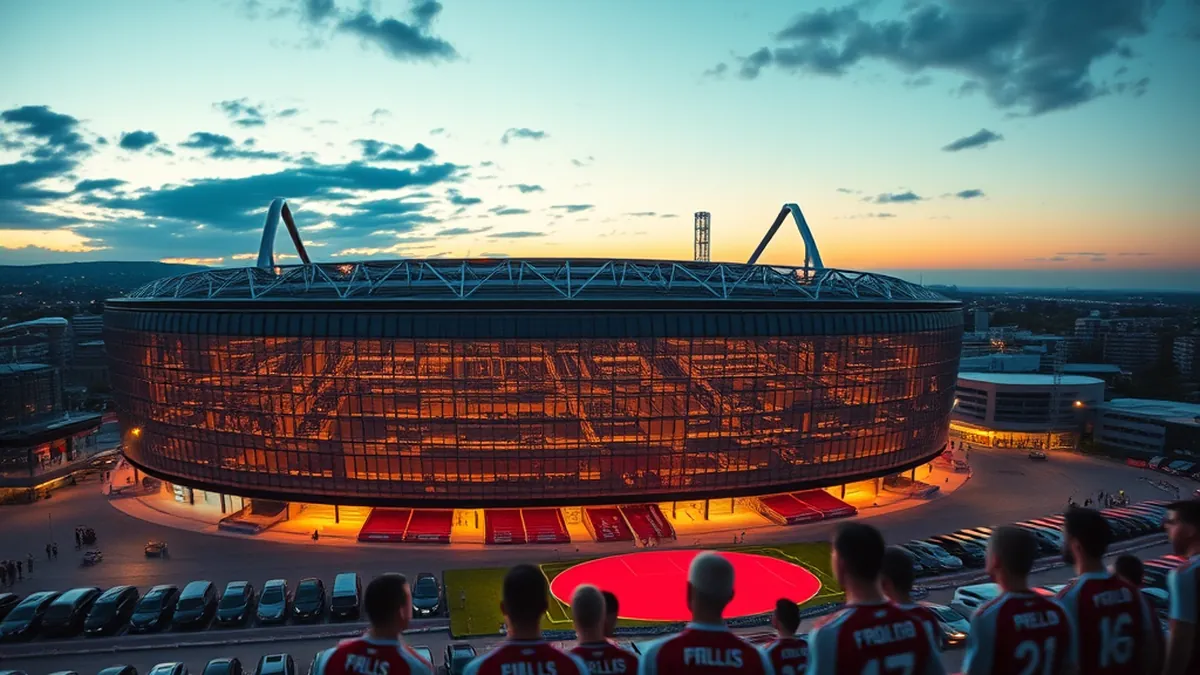
Manchester United confirmed that the new Old Trafford expansion will host fewer car parks, a move aimed at cutting traffic and encouraging public transport ahead of the 2026‑27 season.
The club’s infrastructure team says the decision follows a city‑wide sustainability plan signed off in March 2026. By trimming the number of spaces by roughly 20%, United hopes to lower match‑day emissions and free up land for fan zones and green areas. The revised layout still guarantees at least 5,000 spots, but the emphasis shifts to rail links and bike‑share schemes promoted by Transport for Greater Manchester.
Supporters have mixed feelings. Season‑ticket holder James O'Connor posted on the Red Devils forum that “the idea sounds good, but we need reliable alternatives on game days.” Meanwhile, a poll on the official club app shows 58% of respondents favour the greener approach, while 42% worry about longer walks to the stadium. The club promises shuttle buses from the nearby Metrolink stations, scheduled to run every 10 minutes on match days.
Reducing car parks aligns United with other European giants that have embraced eco‑friendly policies, such as Bayern Munich and Juventus. Marketing director Emma Hayes noted that the move could attract sponsors keen on sustainability, potentially boosting commercial revenue as the team chases a top‑three finish. United currently sit 3rd in the Premier League, 71 points, with a record of 20W‑11D‑7L from 38 games and a recent form of WWDWW, just 14 points behind leaders Arsenal.
Construction crews aim to finish the revised parking plan by the start of the 2026‑27 campaign, with the first home match against Wrexham on 18 July 2026 set to shows the changes. The club will run a trial on 24 May 2026, the night Brighton fell 0‑3 to United, to test shuttle timings and crowd flow. Players such as Benjamin Šeško and Manuel Ugarte remain sidelined, but the squad’s depth means the parking debate won’t distract from on‑field ambitions.
Beyond the immediate environmental impact, United expects the freed‑up space to generate additional revenue through hospitality suites and a fan experience hub. The club’s finance director, John Murtough, hinted that the new facilities could add up to £12 million annually, helping fund future transfers and youth development. As the Red Devils push for silverware, the parking overhaul signals a broader shift toward modern, responsible stadium management.